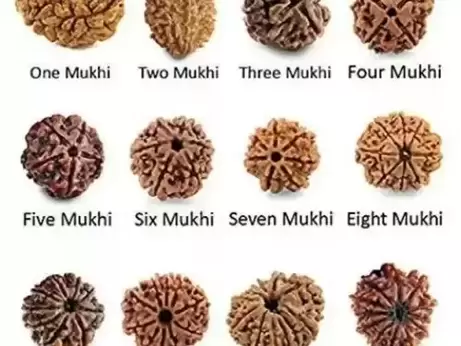
 Rudraksha beads bear a great spiritual, religions and materialistic significance. As per Hindu belief system, Rudraksha is symbol of link between earth and heaven. It is believed that it contains the secrets of evolution of entire cosmos within itself (Chaturvedi B K, 2004). For centuries, the Hindu sages believe that one can cultivate mental, physical and spiritual prowess to attain fearlessness to achieve the ultimate enlightenment (Seetha K N, 2008). Shiva Purana has highlighted divine properties of Rudraksha beads. It channelizes positive flow of energy and leaves a rejuvenating and calming impression on our mind and body. Hence, it is worshipped and worn for seeking benevolence of Lord Shiva and the benefits it holds.
Scientific Composition: Rudraksha tree is common name of the 300 species of Elaeocarpus ganitrus, 35 are found in the Gangetic plain in the foothills of the Himalayas to Nepal, South and Southeast Asia, parts of Australia, Guam, and Hawaii. Rudraksha (dried herbal fruit), chemically contain alkaloids, flavonoids, tannins, steroids, triterpenes, carbohydrates, and cardiac glycosides. Scientific findings: Scientific studies have been conducted world-wide and discovered that Rudraksha due to its Electro-Magnetic properties works magically on our body. A scientific study reported that the electromagnetic properties of Rudraksha beads activate body’s energy wheel, which in turn influences the bioelectrical properties of human body and heals various chronic diseases like blood pressure, heart rate, diabetes, gynaecological problem, neurological disorders, mental problem, insomnia and rheumatism. The Rudraksha have been found to balance/neutralize any excess charge deposited on human body. One of the best-known research papers was published by Dr. Suhas Roy of the prestigious Indian Institute of Technology in Banaras, India. Dr. Roy's research confirmed that the healing powers of Rudraksha beads flow from their electro-magnetic properties. When Rudraksha beads are placed over the heart, they act to stabilize the heartbeat. Similar to magnets, the beads work on the principle of Dynamic Polarity. Blood circulation and heart beat automatically induce a magnetic field around the body and particularly the heart region. Depending on the polarity and intensity of this induced magnetic field, Rudraksha beads transmit subtle electrical and inductive impulses with opposing polarity and intensity. Accordingly, a proportionate balancing force is exerted on the heart to regulate it if it starts beating above or below normal rates. This action helps to ensure ideal blood circulation in the body. Scientific researches have concluded that Rudraksha beads are anti-asthmatic, anti-depressant, anti-anxiety, anti-diabetic, anti-inflammatory, anti-convulsant, anti-hypertensive, anti-microbial, anti-ulcerogenic, anti-oxidant, analgesic, etc. Religious Beliefs: Rudraksha finds mention in Hindu texts – Upanishads, Shiva Purana etc. In Shiva Purana, it is mentioned that after performing penance for thousands of divine years, when Shiva opened the eyes, drops of tears which cropped up the Rudrakṣa plants. These Rudrakṣas are of auspicious nature. The colours of the four types of Rudrakṣas are respectively white, red, yellow and black which are worn according to their own Varna (Brahmin, Kshatriya, Vaishya and Shudra respectively). The Rudrakṣa of the size of an Emblic myrobalan (awla) is excellent; one of the sizes of the fruit of the jujube tree (bair) is medium class; one of the sizes of a gram is lower class. (7-15) That which is of the size of the emblic myrobalan is conducive to the destruction of all distresses. That which is of the size of the berry is conducive to the achievementof the fruit of all desires. The lighter the Rudrakṣa, the more fruitful it is. The wearing of Rudrakṣa is recommended for the sake of destroying sins. Six types of Rudrakṣas shall be discarded - that which is defiled by worms, is cut and broken, has no thorn like protrusions, has cracks and is not circular. That which has a natural hole from end to end is the most excellent; that which is bored through by human effort is the middling one. (17-23) Rudrakṣas based of faces are of various types as under (63-82):
Rudraksas should be worn after being consecrated with the mantra. All evil spirits, ghosts, witches like Dakini and Sakini, other malignant spirits, evil charms and spells etc. fly away on seeing a man with the garland of Rudrakṣas. Seeing a devotee with the garland of Rudrakṣas, Shiva, Viṣhṇu, Devi, Gaṇapati, the sun and all the deities are pleased. (Shiv Purana - Vidhyeshwara Samhita chapter 25 Shloka 84-86). If eleven hundred Rudrakṣas are worn on the person, the man assumes the form of Rudra. A devout man shall make a coronet consisting of five hundred and fifty Rudrakṣas. A person of pious nature shall make three circular strings in the manner of the sacred thread, each having three hundred and sixty beads. Rudrakṣas must be worn on the tuft, the ears, round the neck; round each of the arms, elbows and wrists. (Shiv Purana - Vidhyeshwara Samhita chapter 25 Shloka 28-30) Rudraksas shall be worn on the head repeating “Ishana” mantra; on the ears with “Tripuruṣa” mantra; round the neck with “Aghora” mantra and on the chest; round the forearms with “Aghora Bija” mantra; round the stomach with “Vamadeva” mantra. Or all beads of Rudraksas can be worn with the “Panchakshara” mantra. (Shiv Purana - Vidhyeshwara Samhita chapter 25 Shloka 40-42) A devotee of Shiva shall refrain from eating meat, garlic, onion, red garlic, potherb, Sleṣmataka and liquors. (Shiv Purana - Vidhyeshwara Samhita chapter 25 Shloka 43) People of all Varṇas and asramas even women can wear Rudrakṣa at the bidding of Shiva. The ascetics shall wear it with the Praṇava. (Shiv Purana - Vidhyeshwara Samhita chapter 25 Shloka 47) Those who wear Tripuṇḍra, the matted hair and the Rudrakṣa do not go to Yama’s abode. (Shiv Purana - Vidhyeshwara Samhita chapter 25 Shloka 49) Reference: Shiv Purana - Vidhyeshwara Samhita chapter 25 Shlokas
1 Comment
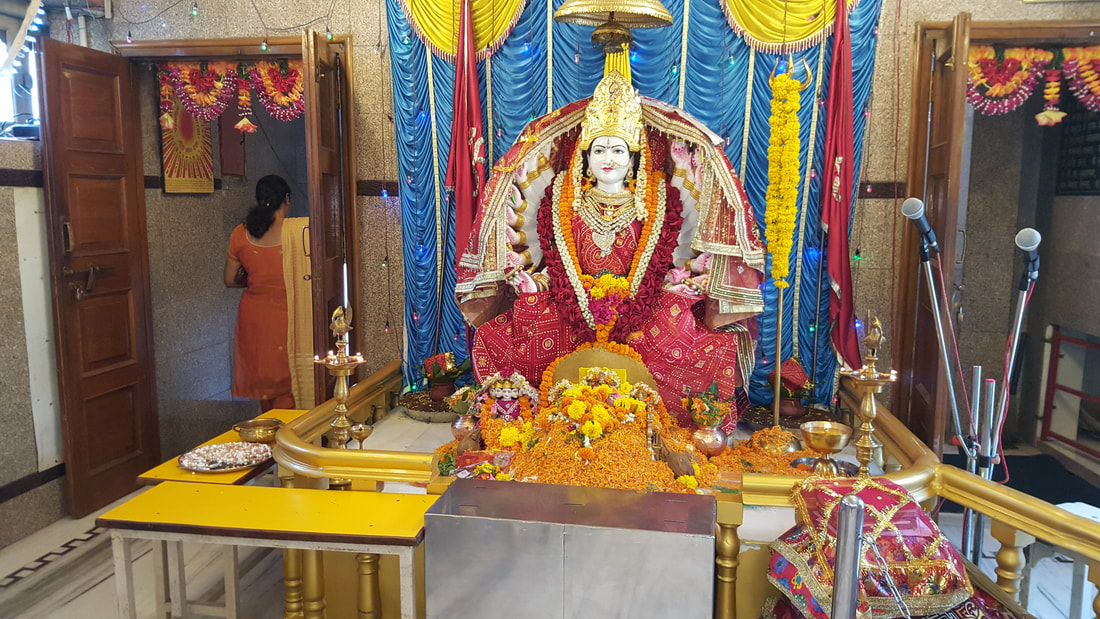 When the great lord of asuras Shumbha was slain there by the Devi, Indra and other devas led by Agni, with their object fulfilled and their cheerful faces illumining the quarters, praised her, (Katyayani).
The Devas said (Chapter – 11): ‘O Devi, you who removes the sufferings of your suppliants, be gracious. Be propitious, O Mother of the whole world. Be gracious, O Mother of the universe. Protect the universe. You are, O Devi, the ruler of all that is moving and unmoving. You are the sole substratum of the world because you subsist in the form of the earth. By you, who exists in the shape of water, all this (universe) is gratified, O Devi of inviolable valour! You are the power of Vishnu and have endless valour. You are the primeval maya, which is the source of the universe; by you all this (universe) has been thrown into an illusion. O Devi, if you become gracious, you become the final cause of emancipation of the world. Salutation to you, O Devi Narayani, you who abides as intelligence in the hearts of all creatures and bestows enjoyment and liberation. You who, in the form of minutes, moments and other divisions of time, brings about change in things, and have (thus) the power to destroy the universe. You who are the good of all good, O auspicious Devi, who accomplish every object, the giver of refuge, O three eyed Gauri! You who have the power of creation, sustenance and destruction and are eternal. You are the substratum and embodiment of the three gunas. You who intent on saving the dejected and distressed that take refuge under you O you, Devi, who removes the sufferings of all! Salutation to you, O Narayani, you who are good fortune, modesty, great wisdom, faith, nourishment, and Svadha, you who are immovable O you, great Night and great Illusion. Salutation to you, O Narayani, you who are intelligence and Sarasvati, O best one, prosperity, consort of Vishnu, dark one, the great nature, be propitious. O Queen of all, you who exist in the form of all, and possess every might, save us from error, O Devi. Salutation to you, Devi Durga! May this benign countenance of yours adorned with three eyes, protect us from all fears. When satisfied, you destroy all illness but when wrathful you put an end to all the longed-for desires. No calamity befalls men who have sought you. Those who have sought you become verily a refuge of others. Who is there other than you in the sciences, in the scriptures, and in the Vedic sayings to light the lamp of discrimination? (Still) you cause this universe to whirl about again and again within the dense darkness of the depths of attachment. Where raksasas and snakes of virulent poison (are), where foes and hosts of robbers (exist), where forest conflagrations (occur), there and in the mid-sea, you stand and save the world. O Queen of the universe, you protect the universe. As the self of the universe, you support the universe. You are the (goddess) worthy to be adored by the Lord of the universe. Those who bow in devotion to you themselves become the refuge of the universe. O Devi, be pleased and protect us always from fear of foes, as you have done just now by the slaughter of asuras. And quickly destroy the sins of all worlds and the great calamities, which have sprung from the maturing of evil portents. O Devi you who remove the afflictions of the universe, be gracious to us who have bowed to you. O you worthy of adoration by the dwellers of the three worlds, be boon giver to the worlds.’ The Devi said, ‘O Devas, I am prepared to bestow a boon. Choose whatever boon you desire in your mind, for the welfare of the world. I shall grant it. The devas said, ‘O Queen of all, in this same manner, you must destroy all our enemies and all the afflictions of three worlds.’ Devi said: - When the twenty-eighth age has arrived, in the Vaivasvata Manvantara, two others great Asuras shall be born, Shumbha and Nishumbha. Then born as the offspring of Yasoda’s womb in the cowherd Nanda’s house, and dwelling on the Vindhya mountains, I will destroy them both. And again, becoming incarnate in a very terrible form on the face of the earth, I will slay the Vaipracitta Danavas; and when I devour those fierce and great Vaipracitta Asuras, my teeth shall become red like the flowers of the pomegranate. Hence the gods in Svarga and men in the world of mortals praising me shall always talk of me as “Red-toothed (Raktdandika).” Men will therefore call me Nandaja. And again, after a period of a hundred years during which rain shall stop, praised by the munis I shall be born, but not womb-begotten, on the earth. Then because I shall behold the munis with a hundred eyes, mankind shall therefore celebrate me as “Hundred-eyed.” Next, I shall support the whole world with the life-sustaining vegetables, which shall grow out of my own body, during a period of heavy rain. I shall gain fame on the earth then as Sakambhari (Shatakshi); and in that very period, I shall slay the great Asura named Durgama. I shall be called as Durga. When Aruṇakṣa shall work great trouble in the three worlds, I shall take a bee-like form, the form of innumerable bees, and shall slay the great Asura. Since I shall be taking the form of a bee and killing the demon Aruṇa, men will glorify me as Bhramari. Again, I shall take a terrible form and devour the Rakṣasas. I shall then be famous as Bhima Devi. Whenever there is harassment caused by the Asuras I shall surely incarnate and work for your welfare. Thus, whenever trouble shall arise caused by the Danavas, at each such time I shall become incarnate and accomplish the foes’ destruction. Devi said (Chapter 12): And whoever with mind composed shall praise me constantly with these hymns, I will quiet down every trouble for him assuredly. And those who shall celebrate the destruction of Madhu and Kaiṭabha, the slaughter of the Asura Mahiṣa, and the slaying of Shumbha and Nishumbha likewise; and those also who shall listen in faith to this poem of my sublime majesty on the eighth day of the lunar fortnight, on the fourteenth and on the ninth, with intent mind, to them shall happen no wrong-doing whatever, nor calamities that arise from wrong-doing, nor poverty, nor indeed deprivation of their desires. Never shall he experience fear from enemies, from robbers, nor from kings, nor from weapon or fire or water-flood. Hence this poem of my majesty must be read by men of composed minds and listened to by them always with faith, for it is the supreme course of blessings. Now may this poem of my majesty quell all kinds of calamities, which arise from grievous pestilence, and the three-fold portent. Where this poem is duly read constantly at my sanctuary, I will never forsake that place, and there my presence is fixed. At the offering of the sacrifice (Bali), and during worship, in the ceremonies with fire, and at a great festival, all this story of my exploits must verily be proclaimed and listened to. I will accept with kindliness both the “Bali” worship that is paid, and the oblation by fire that is offered, by him who understands or him who understands not. And at the great annual worship that is performed in autumn time, the man, who listens filled with faith to this poem of my majesty, shall assuredly through my favour be delivered from every trouble, and be blessed with riches, grain, and children. From listening to this poem of my majesty moreover come splendid issues and prowess in battles, and a man becomes fearless. When men listen to this poem of my majesty, enemies pass to destruction, and prosperity accrues, and their family rejoices. Let a man listen to this poem of my majesty everywhere, at a ceremony for securing tranquility, and after seeing an ill-dream and when planets are greatly eclipsed. Thereby portents turn into calm, and dreadful eclipses of the planets, and an ill-dream which men have seen; and a sweet dream appears. It produces peacefulness in children who have been possessed by the demon that seizes children, and it is the best promoter of friendship among men when union is dissolved; it is the most potent diminisher of the power of all men of ill livelihood; verily through reading it, comes the destruction of Rakṣasas, goblins and Pisachas. All this poem of my majesty brings a man near unto me. And by means of cattle, flowers, arghya offerings and incenses, and by the finest perfumes and lamps, by feasts given to brahmins, by oblations, by sprinkled water day and night, and by various other objects of enjoyment, by gifts yearly— the favour which comes by such means, such favour is won from me when this story of my noble exploits is once heard. When heard it takes away sins and confers perfect health. This celebration of me preserves created beings from future births, even this story of my exploits in battles, the annihilation of the wicked Daityas. When it is heard, no fear, that is caused by enmity, springs up among men. And the hymns which have composed, and those composed by brahmin ṛiṣhis, and those composed by Brahma bestow a splendid mind. He who is surrounded by a raging fire in a forest or on a lonesome road, or who is encompassed by robbers in a desolate spot, or who is captured by enemies, or who is-prowled after by a lion or tiger or by wild elephants in a forest, or who is under the command of an enraged king, or who is sentenced to death, or who has fallen into bonds, or who is whirled around by the wind, or who stands in a ship in the wide sea, or, who is in the most dreadful battle with weapons falling upon him, or who is afflicted with pain amidst all kinds of terrible troubles— such a man on calling to mind this story of my exploits is delivered from his strait. Through my power lions and other dangerous beasts, robbers, and enemies, from a distance indeed, flee from him who calls to mind this story of my exploits. The Rishi said: Having, spoken thus the adorable Chaṇḍika, who is fierce in prowess, vanished there, while the gods were gazing indeed on her. The gods also relieved from fear, their foes being slain, all resumed their own dominions as before, participating in their shares of sacrifices. And the Daityas—when Shumbha, that most fierce foe of the gods, who brought ruin on the world and who was peerless in prowess, had been slain by the goddess in fight, and Nishumbha also great in valour was slain —all came to Patala. Thus, that adorable goddess, although- everlasting, yet taking birth again and again, accomplishes the safeguarding of the world, O king. By her this universe is bewitched she verily gives birth to the universe. And when besought, she bestows knowledge; when gratified, she bestows prosperity. All this egg of Brahma, O king, is pervaded by her, who is Mahakali at Mahakala, and who has the nature of the Great Destroying Goddess. She indeed is Mahamari at the fated time; she indeed is creation, the Unborn; she indeed the Eternal gives stability to created beings at theirs fated time. She indeed is Lakṣhmi, bestowing prosperity on the houses of men while she abides with them; and she indeed when she is absent becomes the goddess of Fortune unto their destruction. When hymned and worshipped with flowers, and with incense, perfumes, and other offerings, she bestows wealth and sons, and a mind brilliant in righteousness. The ṛiṣhi said (Chapter 13): I have now related to you, O king, this sublime poem the Devi-mahatmya. Such majestic power has the goddess, by whom this world is upheld. Moreover, knowledge is conferred by her who is the adorable Vishnu’s Illusive power. By her you and this vaishya and other men of discrimination, and celebrated men are bewitched; and others shall become bewitched. Go unto her, the supreme queen, as to a place of refuge, O great king. She indeed, when propitiated by men, bestows enjoyment, Svarga and final emancipation from existence. Markaṇḍeya spoke: Having heard this his speech, king Suratha fell prostrate before the illustrious ṛiṣhi who performed severe penances, and being down-cast by his excessive regard for self and by the deprivation of his kingdom, went forthwith to perform austerities; and the vaishya, O great muni, in order to get a vision of Amba, took up his station on a sand-bank in a river; and the vaishya practiced austerities, muttering the sublime hymn to the goddess. They both made an earthen image of the goddess on that sandbank, and paid worship to it with flowers, incense, fire and libations of water. Abstaining from food, restricting their food, concentrating their minds on her, keeping their thoughts composed, they both offered the sacrifice (Bali), offering also sprinkled with blood drawn from their own limbs. When they continued with subdued souls to propitiate her thus for three years, Chaṇḍika, who upholds the world, well-pleased spoke in visible shape. The goddess spoke: What do you solicit, O king, and you rejoicer of your family, receive all that from me; I shall bestow it. Markaṇḍeya spoke: Then the king chose a kingdom that should not perish in another life, and in this life his own kingdom wherein the power of his enemies should be destroyed by force. Then the vaishya also, whose mind was down-cast, chose knowledge, — to be wise, knowing ‘what is mine,’ and ‘what I am,’— knowledge that causes the downfall of worldly attachments. The goddess spoke: O king, you shall obtain thine own kingdom in a very few days, after slaying thine enemies; it shall be steadfast for you there; and when dead, you shall gain another life from the god “Vivasvat, and shalt be a Manu on earth, by name Savarṇika. And O excellent vaishya, I bestow on you the boon which you has sought of me; knowledge shall be yours upto full perfection. Markaṇḍeya spoke: Having thus given them both the boon that each desired, the goddess vanished forthwith, while extolled by them both in faith. Having thus gained the boon from the goddess, Suratha the noble kṣattriya shall obtain a new birth through the Sun and shall be the Manu Savarṇi.  Bija Akshara Mantra
A japa of a mantra. A mantra has a rishi who gave it to the world, a meter, which governs the inflection of the voice and a devata, or supernatural being higher or lower, as its informing power. The bija, seed is a significant word or series of words, which gives it a special power. In Kaliyuga, japa is the easiest way to the realization of God. The mode of repetition of a mantra with feeling and in a particular manner, a definite number of times, with right observances, until a fixed number of japa is reached, in order to obtain substantial benefit out of the mantra, is called purashcarana. The practitioner has to observe certain rules and regulations in regard to purashcarana and has to undergo a perfect dietetic discipline, also in accordance wth those injunctions. The mantra when it is mentally recited in this manner will bring to the sadhaka all that he desires within its jurisdiction (provided it is spiritual and for the welfare of humanity). The sadhaka should sit facing either the east or north, during japa. During nights, he must face north. Padma, siddha, swastika, sukha or vir asana is recommended for japa. Cotton cloth, silk, deer skin or tiger skin most preferred should be used as seat, which will bring saubhagya, jnana and early siddhi. It should be borne in mind, that japa done during the time of solar or lunar eclipses will produce a tremendous effect and hence, this rara opportunity should not be missed by anybody, whenever it offers itself. During the six seasons of the year, one should perform japa, before noon, at noon, after noon, at midnight, in the early morning and in the evening respectively. The japa of amantra reduces the force of sankalpa. It attenuates the mind. The mind becomes thread-like (state of tanumanasi), the third Bhumika or stage of jnana). It fills the mind with sattva guna, peace, purity and strength. It develops the will-force. Suka, Sanaka and preferred sages, endowed with great powers of Yoga, enjoyed the Bliss of the supreme by the power of nama. Narada, Prahlada, Sri Hanuman, Sri Sita Devi, Ajamila, Gajendra, Ganika etc. attained moksha by the efficacy of the Divine name. Japa is a very great purifier. It checks the force of the thoughts current moving towards objects. It forces the mind towards God, towards the attainment of the Eternal. Japa eventually helps in obtaining darshan of God. Japa regulates the unsteady vibrations of five sheaths. Japa changes the mind-stuff from worldliness to spirituality, from rajas and activity to sattva and illumination. Bija Akshara: Seed Sanskrit syllables (bijakṣara) are the quintessence of mantra, containing infinite meaning in a single syllable. Regular chanting of beej mantra in the prescribed way can help enhance the spiritual powers of people and enable them see the true light in front of them leading their journeys. Like a seed transform from a tiny speck into a mature, complex plant, these simple-sound seeds within us form the foundation of mighty growth and spiritual evolution. Mantras harnesses the mind in order to connect with the inner self and, thus, the divine. Chants of mantras create thought-energy waves, and the organism vibrates in tune with the energy and spiritual appeal of a chant. Scientists say that when a mantra is chanted rhythmically, it creates a neuro-linguistic effect. Such an effect occurs even if the meaning of the mantra is not known. Some bija mantras are made up of compound letters, such as the mantra Hrim. The bijas of the mahabhutas or elements i.e., of the devata or the presiding intelligence of the elements, viz. ether, air, fire, water and earth, are respectively Ham, Yam, Ram, Vam and Lam. Panchadasi or panchasakshari mantra is of 15 letters. Shodashi or Sodasakshari mantra is of 16 letters.
Reference: Voice of Babaji – by V T Neelakantan, S A A Ramaiah, Babaji Nagaraj 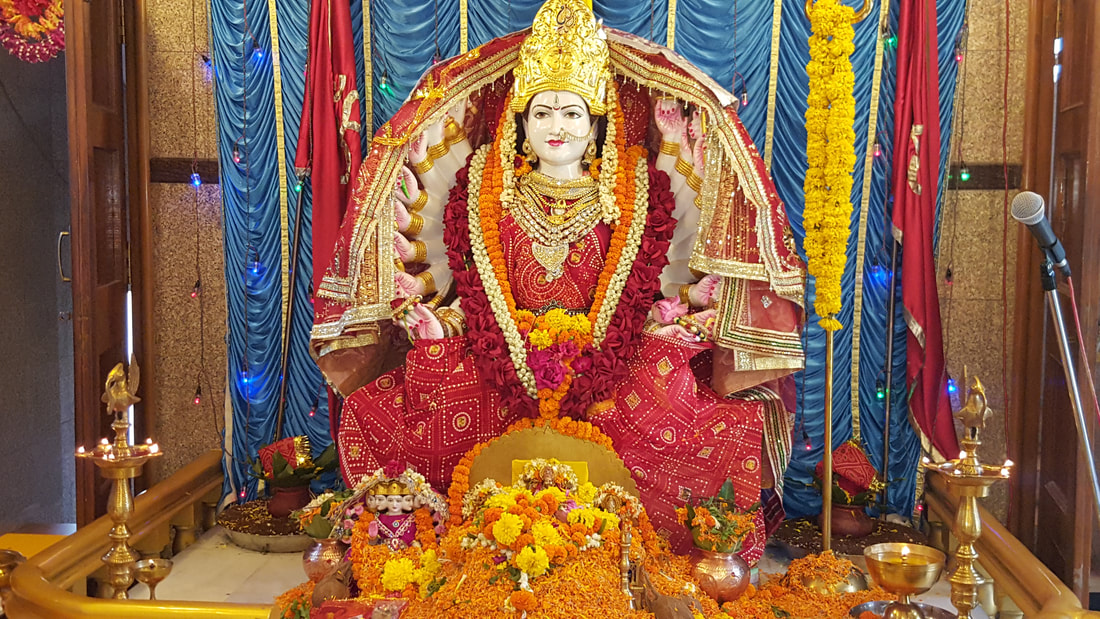 The rishi spoke:
In ancient period, Indra’s (sovereignty) over the three worlds and his portions of the sacrifices were taken away by the asuras, Shumbha and Nishumbha, by force. Due to pride of their power and strength, the two took over the offices of the sun, the moon, Kubera, Yama, and Varuna. They robbed the kingdom of three worlds from three world and of his portions of the sacrifices; they both assumed the sun’s dignity and the moon’s dominion, and Kubera’s and Yama’s and Varuṇa’s; and they both exercised Vayu’s authority and Agni’s sphere of action. Thereby the gods were scattered, deprived of their sovereignties, and put to rout. The thirty gods, bereft of their dominion and set at naught by those two great Asuras, all recall to mind that never-vanquished goddess, — “She granted us the boon, ‘As & when in calamities shall remember, that very moment will I put an end to all your direst calamities.” Making this resolve the gods went to Himalaya, and there raised their hymn to the goddess, who is Vishnu’s illusive power. The Devas spoke:
The rishi spoke: While the gods were thus engaged in offering hymns and other reverential acts, Parvati came there to bathe in the water of the Ganges. She, the beautiful-browed, said to those gods, — “Whom do you hymn here?” And springing forth from the treasure-house of her body the auspicious goddess spoke — “For me this hymn is uttered by the assembled gods, who have been set at naught by the Daitya Shumbha and routed in battle by Nishumbha.” Because Ambika issued forth from the treasure-house of Parvati’s body, she is therefore named in song as Kauṣiki among all the worlds. Now after she had issued forth, the other also, even Parvati, became black; she is celebrated as Kalika; she fixed her abode on Mount Himalaya. Thereafter, Chaṇḍa, and Muṇḍa, the two attendants of Shumbha and Nishumbba, saw Ambika displaying her sublime and most captivating form. They both told Shumbha: ‘O King, one woman, most surpassingly beautiful, dwells there shedding luster on mount Himalaya and illuminating the regions. Such supreme beauty was never seen by anyone anywhere. Ascertain who that Goddess is and take possession of her, O Lord of the asuras! Nishumbha has every kind of gem produced in the sea. Fire also gave you two garments, which are purified by fire. O lord, all those display their splendor at this present time in your house. Airavata, gem among elephants, has been captured from Purandara; and this Parijata tree and the horse Uccaiḥshravas. Here stands the heavenly chariot yoked with swans in your courtyard; it has been brought here, the wonderful chariot composed of gems, which belonged to Brahma. Here is the Nidhi Mahapadma, captured from the Lord of wealth. And the Ocean gave a garland made of filaments and of undying lotus flowers. In thy house stands Varuṇa’s umbrella, which streams with gold. And here is the choice chariot that belonged to Prajapati formerly. You have carried off Death’s power which is named Utkranti-da. The noose of the Ocean-king is in thy brother's possession. And Nishumbha has every kind of gem which is produced in the sea. Agni also gave thee two garments which are purified by fire. Thus, O lord of the Daityas, all gems have been captured by you; why not you seize this auspicious lady, this gem of womankind?” Thus, O Lord of asuras, all gems, precious stones, elephants, horses and other valuable things indeed exist in the three worlds, have been brought by you. Why is this beautiful lady-jewel not seized by you? The rishi spoke: On hearing these words of Chanda and Munda, Shumbha sent the great asura Sugriva as messenger to the Devi. He said: Go and tell her thus in my words and do the thing in such a manner that she may quickly come to me in love. He went there where the Devi was staying in a very beautiful spot on the mountain and spoke to her in fine and sweet words. The messenger said: O Devi, Shumbha, lord of asuras, is the supreme sovereign of three worlds. Sent by him as messenger, I have come here to your presence. Hearken to what has been said by him whose command is never resisted among the devas and who has vanquished all the foes of the asuras: (He says), “All the three worlds are mine and the devas are obedient to me. We look upon you, O Devi, as the jewel of womankind in the world. You who are such, come to me, since we are the enjoyers of the best objects. Take to me or to my younger brother Nishumbha of great prowess, O unsteady-eyed lady, for you are in truth a jewel. Wealth, great and beyond compare, you will get by marrying me. Think over this in your mind and become my wife.” The Rishi said: Thus told, Durga the adorable and auspicious, by whom this universe is supported, then became serene. The Devi said: You have spoken truth; nothing false has been uttered by you in this matter. Shumbha is indeed the sovereign of the three worlds and likewise is also Nishumbha. But in this matter, how can that which has been promised to be made false? Hear what promise I had made already out of foolishness. “He who conquers me in battle, removes my pride and is my match in strength in the world shall be my husband.” So let Shumbha come here then, or Nishumbha the great asura. Vanquishing me here let him soon take my hand in marriage. Why delay? The messenger said: O Devi, you are haughty. Talk not so before me. Which man in the three worlds will stand before Shumbha and Nishumbha? All the devas verily cannot stand face to face with even the other asuras in battle. Why mention you, O Devi, a single woman? Indra and all other devas could not stand in battle against Shumbha and other demons, how will you, a woman, face them? On my word itself, you go to Shumbha and Nishumbha. Let it not be that you go to them with your dignity lost by being dragged by your hair. The Devi said: Yes, true, Shumbha is strong and so is Nishumbha exceedingly heroic! What can I do since there stands my ill-considered vow taken long ago? Go back and tell the lord of asuras carefully all this that I have said; let him do whatever he considers proper. Here ends the fifth chapter called ‘Devi’s conversation with the messenger’ of the Devi-Mahatmya in Markandeya-Purana during the period of Savarni, the Manu. ॥ पञ्चमोऽध्यायः ॥ विनियोगः अस्य श्री उत्तरचरित्रस्य रुद्र ऋषिः । श्रीमहासरस्वती देवता ।अनुष्टुप् छन्दः । भीमा शक्तिः । भ्रामरी बीजम् । सूर्यस्तत्त्वम् । सामवेदः स्वरूपम् । श्रीमहासरस्वतीप्रीत्यर्थे उत्तरचरित्रपाठे विनियोगः । ध्यानम् घण्टाशूलहलानि शङ्खमुसले चक्रं धनुः सायकं हस्ताब्जैर्दधतीं घनान्तविलसच्छीतांशुतुल्यप्रभाम् । गौरीदेहसमुद्भवां त्रिजगतामाधारभूतां महापूर्वामत्र सरस्वतीमनुभजे शुम्भादिदैत्यार्दिनीम् ॥ ॐ क्लीं ऋषिरुवाच ॥ १॥ पुरा शुम्भनिशुम्भाभ्यामसुराभ्यां शचीपतेः । त्रैलोक्यं यज्ञभागाश्च हृता मदबलाश्रयात् ॥ २॥ तावेव सूर्यतां तद्वदधिकारं तथैन्दवम् । कौबेरमथ याम्यं च चक्राते वरुणस्य च ॥ ३॥ तावेव पवनर्द्धिं च चक्रतुर्वह्निकर्म च । ततो देवा विनिर्धूता भ्रष्टराज्याः पराजिताः ॥ ४॥ हृताधिकारास्त्रिदशास्ताभ्यां सर्वे निराकृताः । महासुराभ्यां तां देवीं संस्मरन्त्यपराजिताम् ॥ ५॥ तयास्माकं वरो दत्तो यथापत्सु स्मृताखिलाः । भवतां नाशयिष्यामि तत्क्षणात्परमापदः ॥ ६॥ इति कृत्वा मतिं देवा हिमवन्तं नगेश्वरम् । जग्मुस्तत्र ततो देवीं विष्णुमायां प्रतुष्टुवुः ॥ ७॥ देवा ऊचुः ॥ ८॥ नमो देव्यै महादेव्यै शिवायै सततं नमः । नमः प्रकृत्यै भद्रायै नियताः प्रणताः स्म ताम् ॥ ९॥ रौद्रायै नमो नित्यायै गौर्यै धात्र्यै नमो नमः । ज्योत्स्नायै चेन्दुरूपिण्यै सुखायै सततं नमः ॥ १०॥ कल्याण्यै प्रणतां वृद्ध्यै सिद्ध्यै कुर्मो नमो नमः । नैरृत्यै भूभृतां लक्ष्म्यै शर्वाण्यै ते नमो नमः ॥ ११॥ दुर्गायै दुर्गपारायै सारायै सर्वकारिण्यै । ख्यात्यै तथैव कृष्णायै धूम्रायै सततं नमः ॥ १२॥ अतिसौम्यातिरौद्रायै नतास्तस्यै नमो नमः । नमो जगत्प्रतिष्ठायै देव्यै कृत्यै नमो नमः ॥ १३॥ या देवी सर्वभूतेषु विष्णुमायेति शब्दिता । नमस्तस्यै नमस्तस्यै नमस्तस्यै नमो नमः ॥ १४-१६॥ या देवी सर्वभूतेषु चेतनेत्यभिधीयते । नमस्तस्यै नमस्तस्यै नमस्तस्यै नमो नमः ॥ १७-१९॥ या देवी सर्वभूतेषु बुद्धिरूपेण संस्थिता । नमस्तस्यै नमस्तस्यै नमस्तस्यै नमो नमः ॥ २०-२२॥ या देवी सर्वभूतेषु निद्रारूपेण संस्थिता । नमस्तस्यै नमस्तस्यै नमस्तस्यै नमो नमः ॥ २३-२५॥ या देवी सर्वभूतेषु क्षुधारूपेण संस्थिता । नमस्तस्यै नमस्तस्यै नमस्तस्यै नमो नमः ॥ २६-२८॥ या देवी सर्वभूतेषु छायारूपेण संस्थिता । नमस्तस्यै नमस्तस्यै नमस्तस्यै नमो नमः ॥ २९-३१॥ या देवी सर्वभूतेषु शक्तिरूपेण संस्थिता । नमस्तस्यै नमस्तस्यै नमस्तस्यै नमो नमः ॥ ३२-३४॥ या देवी सर्वभूतेषु तृष्णारूपेण संस्थिता । नमस्तस्यै नमस्तस्यै नमस्तस्यै नमो नमः ॥ ३५-३७॥ या देवी सर्वभूतेषु क्षान्तिरूपेण संस्थिता । नमस्तस्यै नमस्तस्यै नमस्तस्यै नमो नमः ॥ ३८-४०॥ या देवी सर्वभूतेषु जातिरूपेण संस्थिता । नमस्तस्यै नमस्तस्यै नमस्तस्यै नमो नमः ॥ ४१-४३॥ या देवी सर्वभूतेषु लज्जारूपेण संस्थिता । नमस्तस्यै नमस्तस्यै नमस्तस्यै नमो नमः ॥ ४४-४६॥ या देवी सर्वभूतेषु शान्तिरूपेण संस्थिता । नमस्तस्यै नमस्तस्यै नमस्तस्यै नमो नमः ॥ ४७-४९॥ या देवी सर्वभूतेषु श्रद्धारूपेण संस्थिता ।नमस्तस्यै नमस्तस्यै नमस्तस्यै नमो नमः ॥ ५०-५२॥ या देवी सर्वभूतेषु कान्तिरूपेण संस्थिता । नमस्तस्यै नमस्तस्यै नमस्तस्यै नमो नमः ॥ ५३-५५॥ या देवी सर्वभूतेषु लक्ष्मीरूपेण संस्थिता । नमस्तस्यै नमस्तस्यै नमस्तस्यै नमो नमः ॥ ५६-५८॥ या देवी सर्वभूतेषु वृत्तिरूपेण संस्थिता । नमस्तस्यै नमस्तस्यै नमस्तस्यै नमो नमः ॥ ५९-६१॥ या देवी सर्वभूतेषु स्मृतिरूपेण संस्थिता । नमस्तस्यै नमस्तस्यै नमस्तस्यै नमो नमः ॥ ६२-६४॥ या देवी सर्वभूतेषु दयारूपेण संस्थिता । नमस्तस्यै नमस्तस्यै नमस्तस्यै नमो नमः ॥ ६५-६७॥ या देवी सर्वभूतेषु तुष्टिरूपेण संस्थिता । नमस्तस्यै नमस्तस्यै नमस्तस्यै नमो नमः ॥ ६८-७०॥ या देवी सर्वभूतेषु मातृरूपेण संस्थिता । नमस्तस्यै नमस्तस्यै नमस्तस्यै नमो नमः ॥ ७१-७३॥ या देवी सर्वभूतेषु भ्रान्तिरूपेण संस्थिता । नमस्तस्यै नमस्तस्यै नमस्तस्यै नमो नमः ॥ ७४-७६॥ इन्द्रियाणामधिष्ठात्री भूतानां चाखिलेषु या । भूतेषु सततं तस्यै व्याप्त्यै देव्यै नमो नमः ॥ ७७॥ चितिरूपेण या कृत्स्नमेतद् व्याप्य स्थिता जगत् । नमस्तस्यै नमस्तस्यै नमस्तस्यै नमो नमः ॥ ७८-८०॥ स्तुता सुरैः पूर्वमभीष्टसंश्रयात्तथा सुरेन्द्रेण दिनेषु सेविता । करोतु सा नः शुभहेतुरीश्वरी शुभानि भद्राण्यभिहन्तु चापदः ॥ ८१॥ या साम्प्रतं चोद्धतदैत्यतापितैरस्माभिरीशा च सुरैर्नमस्यते । या च स्मृता तत्क्षणमेव हन्ति नः सर्वापदो भक्तिविनम्रमूर्तिभिः ॥ ८२॥ ऋषिरुवाच ॥ ८३॥ एवं स्तवाभियुक्तानां देवानां तत्र पार्वती । स्नातुमभ्याययौ तोये जाह्नव्या नृपनन्दन ॥ ८४॥ साब्रवीत्तान् सुरान् सुभ्रूर्भवद्भिः स्तूयतेऽत्र का । शरीरकोशतश्चास्याः समुद्भूताब्रवीच्छिवा ॥ ८५॥ स्तोत्रं ममैतत्क्रियते शुम्भदैत्यनिराकृतैः । देवैः समेतैः समरे निशुम्भेन पराजितैः ॥ ८६॥ शरीरकोशाद्यत्तस्याः पार्वत्या निःसृताम्बिका । कौशिकीति समस्तेषु ततो लोकेषु गीयते ॥ ८७॥ तस्यां विनिर्गतायां तु कृष्णाभूत्सापि पार्वती । कालिकेति समाख्याता हिमाचलकृताश्रया ॥ ८८॥ ततोऽम्बिकां परं रूपं बिभ्राणां सुमनोहरम् । ददर्श चण्डो मुण्डश्च भृत्यौ शुम्भनिशुम्भयोः ॥ ८९॥ ताभ्यां शुम्भाय चाख्याता सातीव सुमनोहरा । काप्यास्ते स्त्री महाराज भासयन्ती हिमाचलम् ॥ ९०॥ नैव तादृक् क्वचिद्रूपं दृष्टं केनचिदुत्तमम् । ज्ञायतां काप्यसौ देवी गृह्यतां चासुरेश्वर ॥ ९१॥ स्त्रीरत्नमतिचार्वङ्गी द्योतयन्ती दिशस्त्विषा । सा तु तिष्ठति दैत्येन्द्र तां भवान् द्रष्टुमर्हति ॥ ९२॥ यानि रत्नानि मणयो गजाश्वादीनि वै प्रभो । त्रैलोक्ये तु समस्तानि साम्प्रतं भान्ति ते गृहे ॥ ९३॥ ऐरावतः समानीतो गजरत्नं पुरन्दरात् । पारिजाततरुश्चायं तथैवोच्चैःश्रवा हयः ॥ ९४॥ विमानं हंससंयुक्तमेतत्तिष्ठति तेऽङ्गणे । रत्नभूतमिहानीतं यदासीद्वेधसोऽद्भुतम् ॥ ९५॥ निधिरेष महापद्मः समानीतो धनेश्वरात् । किञ्जल्किनीं ददौ चाब्धिर्मालामम्लानपङ्कजाम् ॥ ९६॥ छत्रं ते वारुणं गेहे काञ्चनस्रावि तिष्ठति । तथायं स्यन्दनवरो यः पुरासीत्प्रजापतेः ॥ ९७॥ मृत्योरुत्क्रान्तिदा नाम शक्तिरीश त्वया हृता । पाशः सलिलराजस्य भ्रातुस्तव परिग्रहे ॥ ९८॥ निशुम्भस्याब्धिजाताश्च समस्ता रत्नजातयः । वह्निरपि ददौ तुभ्यमग्निशौचे च वाससी ॥ ९९॥ एवं दैत्येन्द्र रत्नानि समस्तान्याहृतानि ते । स्त्रीरत्नमेषा कल्याणी त्वया कस्मान्न गृह्यते ॥ १००॥ ऋषिरुवाच ॥ १०१॥ निशम्येति वचः शुम्भः स तदा चण्डमुण्डयोः । प्रेषयामास सुग्रीवं दूतं देव्या महासुरम् ॥ १०२॥ इति चेति च वक्तव्या सा गत्वा वचनान्मम । यथा चाभ्येति सम्प्रीत्या तथा कार्यं त्वया लघु ॥ १०३॥ स तत्र गत्वा यत्रास्ते शैलोद्देशेऽतिशोभने । तां च देवीं ततः प्राह श्लक्ष्णं मधुरया गिरा ॥ १०४॥ दूत उवाच ॥ १०५॥ देवि दैत्येश्वरः शुम्भस्त्रैलोक्ये परमेश्वरः । दूतोऽहं प्रेषितस्तेन त्वत्सकाशमिहागतः ॥ १०६॥ अव्याहताज्ञः सर्वासु यः सदा देवयोनिषु । निर्जिताखिलदैत्यारिः स यदाह शृणुष्व तत् ॥ १०७॥ मम त्रैलोक्यमखिलं मम देवा वशानुगाः । यज्ञभागानहं सर्वानुपाश्नामि पृथक् पृथक् ॥ १०८॥ त्रैलोक्ये वररत्नानि मम वश्यान्यशेषतः । तथैव गजरत्नं च हृतं देवेन्द्रवाहनम् ॥ १०९॥ क्षीरोदमथनोद्भूतमश्वरत्नं ममामरैः । उच्चैःश्रवससंज्ञं तत्प्रणिपत्य समर्पितम् ॥ ११०॥ यानि चान्यानि देवेषु गन्धर्वेषूरगेषु च । रत्नभूतानि भूतानि तानि मय्येव शोभने ॥ १११॥ स्त्रीरत्नभूतां त्वां देवि लोके मन्यामहे वयम् । सा त्वमस्मानुपागच्छ यतो रत्नभुजो वयम् ॥ ११२॥ मां वा ममानुजं वापि निशुम्भमुरुविक्रमम् । भज त्वं चञ्चलापाङ्गि रत्नभूतासि वै यतः ॥ ११३॥ परमैश्वर्यमतुलं प्राप्स्यसे मत्परिग्रहात् । एतद्बुद्ध्या समालोच्य मत्परिग्रहतां व्रज ॥ ११४॥ ऋषिरुवाच ॥ ११५॥ इत्युक्ता सा तदा देवी गम्भीरान्तःस्मिता जगौ । दुर्गा भगवती भद्रा ययेदं धार्यते जगत् ॥ ११६॥ देव्युवाच ॥ ११७॥ सत्यमुक्तं त्वया नात्र मिथ्या किञ्चित्त्वयोदितम् । त्रैलोक्याधिपतिः शुम्भो निशुम्भश्चापि तादृशः ॥ ११८॥ किं त्वत्र यत्प्रतिज्ञातं मिथ्या तत्क्रियते कथम् । श्रूयतामल्पबुद्धित्वात्प्रतिज्ञा या कृता पुरा ॥ ११९॥ यो मां जयति सङ्ग्रामे यो मे दर्पं व्यपोहति । यो मे प्रतिबलो लोके स मे भर्ता भविष्यति ॥ १२०॥ तदागच्छतु शुम्भोऽत्र निशुम्भो वा महाबलः । मां जित्वा किं चिरेणात्र पाणिं गृह्णातु मे लघु ॥ १२१॥ दूत उवाच ॥ १२२॥ अवलिप्तासि मैवं त्वं देवि ब्रूहि ममाग्रतः । त्रैलोक्ये कः पुमांस्तिष्ठेदग्रे शुम्भनिशुम्भयोः ॥ १२३॥ अन्येषामपि दैत्यानां सर्वे देवा न वै युधि । तिष्ठन्ति सम्मुखे देवि किं पुनः स्त्री त्वमेकिका ॥ १२४॥ इन्द्राद्याः सकला देवास्तस्थुर्येषां न संयुगे । शुम्भादीनां कथं तेषां स्त्री प्रयास्यसि सम्मुखम् ॥ १२५॥ सा त्वं गच्छ मयैवोक्ता पार्श्वं शुम्भनिशुम्भयोः । केशाकर्षणनिर्धूतगौरवा मा गमिष्यसि ॥ १२६॥ देव्युवाच ॥ १२७॥ एवमेतद् बली शुम्भो निशुम्भश्चापितादृशः । किं करोमि प्रतिज्ञा मे यदनालोचिता पुरा ॥ १२८॥ स त्वं गच्छ मयोक्तं ते यदेतत्सर्वमादृतः । तदाचक्ष्वासुरेन्द्राय स च युक्तं करोतु यत् ॥ १२९॥ ॥ स्वस्ति श्रीमार्कण्डेयपुराणे सावर्णिके मन्वन्तरे देवीमाहात्म्ये देव्या दूतसंवादो नाम पञ्चमोऽध्यायः ॥ ५॥ 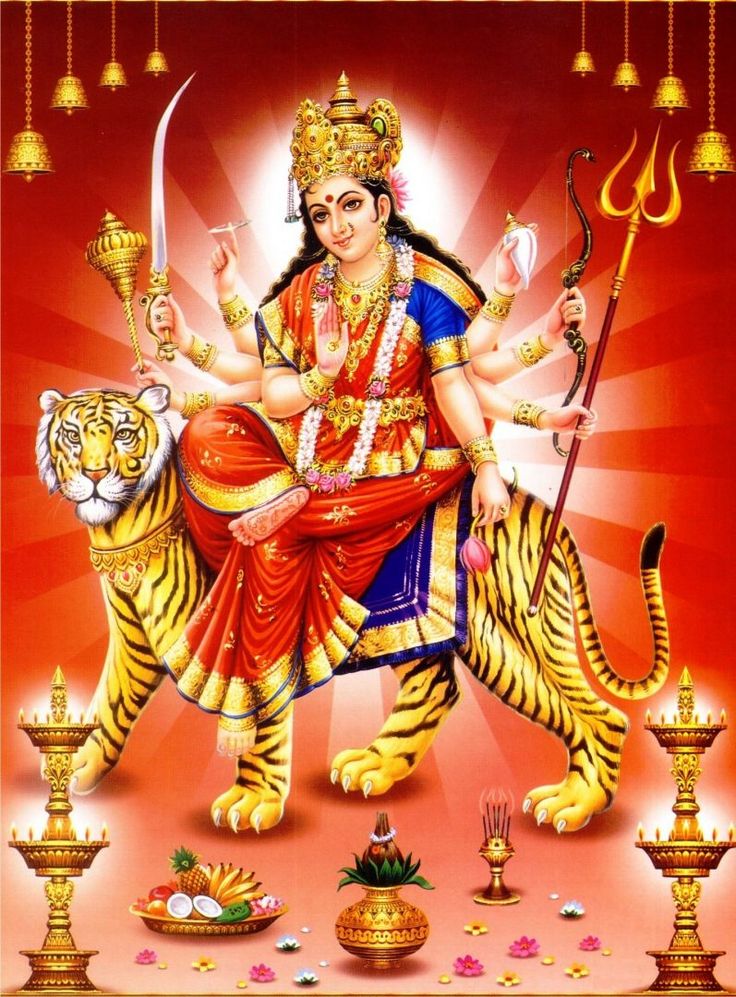 Worship of Ambika by Indra & other devas – Sri Durga Saptashati (Chapter 4)
When that most valiant evil souled Mahishasura and his army were destroyed by the Devi, Indra and the hosts of other gods poured forth their praises to her with their voices, reverently bending down their necks and shoulders, while they looked extremely delighted with horripilation and exultation. (1-2) Devas said:
Here ends the fourth chapter called ‘The Devi Stuti’ of the Devi-Mahatmya in Markandeya-Purana during the period of Savarni, the Man ॥ चतुर्थोऽध्यायः ॥ ॐ ऋषिरुवाच ॥ १॥ शक्रादयः सुरगणा निहतेऽतिवीर्ये तस्मिन्दुरात्मनि सुरारिबले च देव्या । तां तुष्टुवुः प्रणतिनम्रशिरोधरांसा वाग्भिः प्रहर्षपुलकोद्गमचारुदेहाः ॥ २॥ देव्या यया ततमिदं जगदात्मशक्त्या निःशेषदेवगणशक्तिसमूहमूर्त्या । तामम्बिकामखिलदेवमहर्षिपूज्यां भक्त्या नताः स्म विदधातु शुभानि सा नः ॥ ३॥ यस्याः प्रभावमतुलं भगवाननन्तो ब्रह्मा हरश्च न हि वक्तुमलं बलं च । सा चण्डिकाखिलजगत्परिपालनाय नाशाय चाशुभभयस्य मतिं करोतु ॥ ४॥ या श्रीः स्वयं सुकृतिनां भवनेष्वलक्ष्मीः पापात्मनां कृतधियां हृदयेषु बुद्धिः । श्रद्धा सतां कुलजनप्रभवस्य लज्जा तां त्वां नताः स्म परिपालय देवि विश्वम् ॥ ५॥ किं वर्णयाम तव रूपमचिन्त्यमेतत् किञ्चातिवीर्यमसुरक्षयकारि भूरि । किं चाहवेषु चरितानि तवाति यानि सर्वेषु देव्यसुरदेवगणादिकेषु ॥ ६॥ हेतुः समस्तजगतां त्रिगुणापि दोषैर्न ज्ञायसे हरिहरादिभिरप्यपारा | सर्वाश्रयाखिलमिदं जगदंशभूतमव्याकृता हि परमा प्रकृतिस्त्वमाद्या ॥ ७॥ यस्याः समस्तसुरता समुदीरणेन तृप्तिं प्रयाति सकलेषु मखेषु देवि । स्वाहासि वै पितृगणस्य च तृप्तिहेतुरुच्चार्यसे त्वमत एव जनैः स्वधा च ॥ ८॥ या मुक्तिहेतुरविचिन्त्यमहाव्रता त्वं अभ्यस्यसे सुनियतेन्द्रियतत्त्वसारैः । मोक्षार्थिभिर्मुनिभिरस्तसमस्तदोषै र्विद्यासि सा भगवती परमा हि देवि ॥ ९॥ शब्दात्मिका सुविमलर्ग्यजुषां निधानमुद्गीथरम्यपदपाठवतां च साम्नाम् । देवि त्रयी भगवती भवभावनाय वार्तासि सर्वजगतां परमार्तिहन्त्री ॥ १०॥ मेधासि देवि विदिताखिलशास्त्रसारा दुर्गासि दुर्गभवसागरनौरसङ्गा । श्रीः कैटभारिहृदयैककृताधिवासा गौरी त्वमेव शशिमौलिकृतप्रतिष्ठा ॥ ११॥ ईषत्सहासममलं परिपूर्णचन्द्रबिम्बानुकारि कनकोत्तमकान्तिकान्तम् । अत्यद्भुतं प्रहृतमात्तरुषा तथापि वक्त्रं विलोक्य सहसा महिषासुरेण ॥ १२॥ दृष्ट्वा तु देवि कुपितं भ्रुकुटीकराल मुद्यच्छशाङ्कसदृशच्छवि यन्न सद्यः । प्राणान् मुमोच महिषस्तदतीव चित्रं कैर्जीव्यते हि कुपितान्तकदर्शनेन ॥ १३॥ देवि प्रसीद परमा भवती भवाय सद्यो विनाशयसि कोपवती कुलानि । विज्ञातमेतदधुनैव यदस्तमेतन्नीतं बलं सुविपुलं महिषासुरस्य ॥ १४॥ ते सम्मता जनपदेषु धनानि तेषां तेषां यशांसि न च सीदति बन्धुवर्गः । धन्यास्त एव निभृतात्मजभृत्यदारा येषां सदाभ्युदयदा भवती प्रसन्ना ॥ १५॥ धर्म्याणि देवि सकलानि सदैव कर्माण्यत्यादृतः प्रतिदिनं सुकृती करोति । स्वर्गं प्रयाति च ततो भवती प्रसादाल्लोकत्रयेऽपि फलदा ननु देवि तेन ॥ १६॥ दुर्गे स्मृता हरसि भीतिमशेषजन्तोः स्वस्थैः स्मृता मतिमतीव शुभां ददासि । दारिद्र्यदुःखभयहारिणि का त्वदन्या सर्वोपकारकरणाय सदार्द्रचित्ता ॥ १७॥ एभिर्हतैर्जगदुपैति सुखं तथैते कुर्वन्तु नाम नरकाय चिराय पापम् । सङ्ग्राममृत्युमधिगम्य दिवं प्रयान्तु मत्वेति नूनमहितान्विनिहंसि देवि ॥ १८॥ दृष्ट्वैव किं न भवती प्रकरोति भस्म सर्वासुरानरिषु यत्प्रहिणोषि शस्त्रम् । लोकान्प्रयान्तु रिपवोऽपि हि शस्त्रपूता इत्थं मतिर्भवति तेष्वहितेषुसाध्वी ॥ १९॥ खड्गप्रभानिकरविस्फुरणैस्तथोग्रैः शूलाग्रकान्तिनिवहेन दृशोऽसुराणाम् । यन्नागता विलयमंशुमदिन्दुखण्डयोग्याननं तव विलोकयतां तदेतत् ॥ २०॥ दुर्वृत्तवृत्तशमनं तव देवि शीलं रूपं तथैतदविचिन्त्यमतुल्यमन्यैः । वीर्यं च हन्तृ हृतदेवपराक्रमाणां वैरिष्वपि प्रकटितैव दया त्वयेत्थम् ॥ २१॥ केनोपमा भवतु तेऽस्य पराक्रमस्य रूपं च शत्रुभयकार्यतिहारि कुत्र । चित्ते कृपा समरनिष्ठुरता च दृष्टा त्वय्येव देवि वरदे भुवनत्रयेऽपि ॥ २२॥ त्रैलोक्यमेतदखिलं रिपुनाशनेनत्रातं त्वया समरमूर्धनि तेऽपि हत्वा । नीता दिवं रिपुगणा भयमप्यपास्तम् अस्माकमुन्मदसुरारिभवं नमस्ते ॥ २३॥ शूलेन पाहि नो देवि पाहि खड्गेन चाम्बिके । घण्टास्वनेन नः पाहि चापज्यानिःस्वनेन च ॥ २४॥ प्राच्यां रक्ष प्रतीच्यां च चण्डिके रक्ष दक्षिणे । भ्रामणेनात्मशूलस्य उत्तरस्यां तथेश्वरि ॥ २५॥ सौम्यानि यानि रूपाणि त्रैलोक्ये विचरन्ति ते । यानि चात्यन्तघोराणि तै रक्षास्मांस्तथा भुवम् ॥ २६॥ खड्गशूलगदादीनि यानि चास्त्रानि तेऽम्बिके । करपल्लवसङ्गीनि तैरस्मान्रक्ष सर्वतः ॥ २७॥ ऋषिरुवाच ॥ २८॥ एवं स्तुता सुरैर्दिव्यैः कुसुमैर्नन्दनोद्भवैः । अर्चिता जगतां धात्री तथा गन्धानुलेपनैः ॥ २९॥ भक्त्या समस्तैस्त्रिदशैर्दिव्यैर्धूपैः सुधूपिता । प्राह प्रसादसुमुखी समस्तान् प्रणतान् सुरान् ॥ ३०॥ देव्युवाच ॥ ३१॥ व्रियतां त्रिदशाः सर्वे यदस्मत्तोऽभिवाञ्छितम् ॥ ३२॥ देवा ऊचुः ॥ ३३॥ भगवत्या कृतं सर्वं न किञ्चिदवशिष्यते ॥ ३४॥ यदयं निहतः शत्रुरस्माकं महिषासुरः । यदि चापि वरो देयस्त्वयास्माकं महेश्वरि ॥ ३५॥ संस्मृता संस्मृता त्वं नो हिंसेथाः परमापदः । यश्च मर्त्यः स्तवैरेभिस्त्वां स्तोष्यत्यमलानने ॥ ३६॥ तस्य वित्तर्द्धिविभवैर्धनदारादिसम्पदाम् । वृद्धयेऽस्मत्प्रसन्ना त्वं भवेथाः सर्वदाम्बिके ॥ ३७॥ ऋषिरुवाच ॥ ३८॥ इति प्रसादिता देवैर्जगतोऽर्थे तथात्मनः । तथेत्युक्त्वा भद्रकाली बभूवान्तर्हिता नृप ॥ ३९॥ इत्येतत्कथितं भूप सम्भूता सा यथा पुरा । देवी देवशरीरेभ्यो जगत्त्रयहितैषिणी ॥ ४०॥ पुनश्च गौरीदेहात्सा समुद्भूता यथाभवत् । वधाय दुष्टदैत्यानां तथा शुम्भनिशुम्भयोः ॥ ४१॥ रक्षणाय च लोकानां देवानामुपकारिणी । तच्छृणुष्व मयाख्यातं यथावत्कथयामि ते ॥ ४२॥ । ह्रीं ॐ । ॥ स्वस्ति श्रीमार्कण्डेयपुराणे सावर्णिके मन्वन्तरे देवीमाहात्म्ये शक्रादिस्तुतिर्नाम चतुर्थोऽध्यायः ॥ ४॥ |
Archives
April 2024
Categories |
 RSS Feed