|
Pre-Meditative & Meditative Asanas (Postures)
Relaxation and Pre-meditative asanas may be done for relaxation and loosening up the legs respectively. Meditative asanas are the body positions usually sitting but also sometimes standing or reclining, used to facilitate meditation. Relaxation Asanas: - A few relaxation practices are
Pre-Meditative Asanas: -
Meditative Asanas: - During meditation, sitting asana position should be most stable and the body firm & immovable. This should not require efforts to keep spine upright. To sit long in the same position, loosening up of the legs is necessary which is possible by half butterfly and hip rotation.
For transmutation of the sexual energy – Supta Vajrasana (Sleeping Thunderbolt pose) – this asana helps to transmute sexual energy into more subtle forms of energy. It also gives the benefits of matsyasana. To do this asana one should have supple back and flexible legs. Those with stiff legs should not attempt it. Process: Sit in vajrasana, knees could be together or separated, rest same as Matsyasana (lean slightly backwards, place the hands on the floor slightly behind & on the sides of the buttock, support the weight of the body on the straight arms, bend one of the arms, allowing forearm & elbow to rest on the ground, slowly bend the other arm so that both elbows rest on the ground behind the buttocks, bend the head backwards so that you can see the floor behind the head, stretch the neck as much as comfortable, slowly slide the arms forwards away from the head, lower the top of the head towards the ground, gently allow top of the head to support the body weight, relax the arms allowing head, buttocks & legs take the body weight, breathe slowly & deeply, stay in this final pose, return to the starting position. Alternatively, the arms can be folded behind the head). Reference: A systematic Course in the Ancient Tantric Techniques of Yoga and Kriya – by Swami Satyananda Saraswati
0 Comments
 Sri Chaitanya Mahaprabhu was born at Mayapur near Navaidip, district Nadia (75 miles from Kolkata) West Bengal, who lived during 1486-1533. He was from Bengali Brahmin family. At sixteen, he was youngest professor in Nadia who attracted large numbers of students. He also challenged other scholars to debates in East Bengal and turned victorious.
Incarnation of Sri Krishna: He is considered an avatar of Lord Krishna by his followers. Many supernatural phenomena were seen manifesting on the boy’s body. While sleeping a moon like aura was sometimes found floating over him and in his bed room many luminous figures appeared before his mother. He is believed to be Radha and Krishna came in one body. Initiation for Worship of Radha-Krishna: When he was around twenty years, he undertook a pilgrimage to Gaya, to perform pinda-rites for the salvation of his ancestors. After pida-rites, when worshipped at Vishnu-pada, he fell into trance. When he fell, an ascetic Isvara Puri supported him. After coming to normalcy, Sri Chaitanya requested Puri to help him realize a glimpse of Radha’s love for Sri Krishna. Isvara Puri initiated him into the Mantra for Sri Krishna worship. Immediately after initiation, his jovial mood was transformed into sorrowful mood. His soul tossed from sorrow to ecstasy and from ecstasy to sorrow. Start of Sri Krishna Sankirtan: After return from Gaya, he fell into trance a number of times and developed religious ecstasy. He failed to teach the students. Then he proposed to start Sri Krishna kirtan. The eight expressions of intense God-love – weeping, shivering, sweating, horripilation, fainting etc. – began to manifest in him. Such external manifestations of the onset of Sri Krishna prema were sometimes very uncontrollable and turbulent in nature. Once, he behaved strangely and declared himself as deity. He and his followers started Sri Krishna Kirtans (Har Bol) from door to door to spread Sri Krishna bhakti. When he was twenty four, the Radha mood began possess him more. He had taught Bhakti till then and now he wanted to teach Prema (intense love) by his own example. In Radha mood he began to heave sighs of longing, and manifest agonizing pangs of separation and collapsing. Pilgrimage to Jagannath Puri: He madly longed to go to Vrindavan. For five days he walked without food or rest through fields and forests and lost the way. He reached the residence of a Advaita Acharya at Santipur who persuaded him to go to Jagannath Puri. After reaching Puri temple, he rushed like one frenzied towards the image to embrace Jagannath and in the process fell down. There he met Pandit Vasudeva Sarvabhauma in Puri who advised Chaitanya that he was too young to be ascetic, that his devotional fervor, singing, dancing etc. were mere eccentricities and aberrations, and that he should now learn Vedanta under him. Chaitanya accepted the proposal. During taking lessons, the Pandit asked whether he was following his exposition, and got the shocking reply that Vedanta text was itself simple enough for him to understand, but he could not understand even a word of Shankara’s commentary. Then for a verse from Bhagavad Gita, the Pandit gave nine meanings, Chaitanya gave many more. Then the Pandit declared him full of Vedic wisdom. The Pandit surrendered himself to Chaitanya and prostrated at his feet. When he got up and looked, he saw six armed divinity instead Chaitanya. The sight put him into a state of rapt Samadhi. Next day, Chaitanya told him: the law of Prema-Bhakti is as Radha had sung: “Listen! The flute my beloved is beckoning me. I must go. My beloved cannot be won without sacrifice. If you desire to capture Him, you must first surrender everything to Him.” Pilgrimage along Eastern Coast, Southern & Western Parts of India: Sri Chaitanya travelled along east coast to south up to Kanyakumari and visited several places such as Rajamundri near east Godavari, Kanyakumari, Madurai, Udupi (seat of Madhacharya’s religion), etc. He then passed through western and middle regions of India where he visited the famous Pandarpur in Maharashtra, Dwarka, etc. Then he travelled towards Puri passing through many holy places along the banks of Tapti, Narmada and Godavari. After the stay of three years at Puri, he left Puri and proceeded for Vrindavan. On the way, he stayed at Varanasi, Prayaga and Mathura. After a few months stay in Vrindavan, he returned to Prayaga. He converted a large number of Mohammedans not by the scriptures of Vaishnavism but by argument from the Quran. The descendants of those converts are still known as Pathan Vaishnavas. Return to Puri: Sri Chaitanya returned Puri from Prayag. He continued to stay at Puri for eighteen years, until His disappearance in His forty-eighth year at the time of Sankirtan in the temple of Tota Gopinath. During these 18 years, His life was one of settled love and piety. He was surrounded by numerous followers, all of whom were of the highest order of the Vaishnavas having spiritual love in Radha-Krishna. His Teachings:
Reference: Bhakti Schools of Vedanta – by Swami Tapasyananda, Sri Ramakrishna Math, Chennai.  “Krushnam vande jagat gurum” means I bow to Krishna, the teacher of the world.
Shri Krishna is historical figure and the Purnaavtara (complete incarnation) who appeared in this world on 18th July, 3102 BC, in the last part of Dwapar Yuga of 28th Manyavantra (around 5122 years ago). He appeared before Ma Devaki as four armed Vishnu at mid-night, Sravani Krishna Astami. The Vishnu Purana stated that it was a dreadful night with heavy rain and violent wind. He was 8th incarnation (Avatar) of Vishnu Bhagwan. He lived and died for the fellow human beings. He shared the joys and sorrows of kings and commoners alike. Not only he transmitted the wisdom of Upanishads & Vedas in form of Bhagavad Gita, but His life was also lessons on bhakti yoga, karma yoga, jnana yoga and Raja Yoga. The four dimensional perspective of His personality has been attempted in this article. No scripture could recount the entire life of Shri Krishna. It is told primarily through Srimad Bhagavatam, Garga Samhita, Visnu Purana, Brahmavaivarta Purana, Mahabharata, Harivamsa and several other puranas. Why called as Purnaavtara (complete incarnation of the almighty): Shri Krishna proclaimed himself as Almighty and liberated many during his lifetime. He performed several humanly impossible tasks, showed Virat form and extra-ordinary qualities.
Shri Krishna is a perfect personification of divinity. He was a revolutionary of his time. He accomplished the protection of feeble & gentle, destruction of evil-doers and installation dharma. He believed that whenever popular righteous is in opposition, one should follow the higher cause of dharma. He is symbol of compassion, tenderness, love, destroyer of evil-doers, perfect in his different roles, man of wisdom and above all yogeshwar.
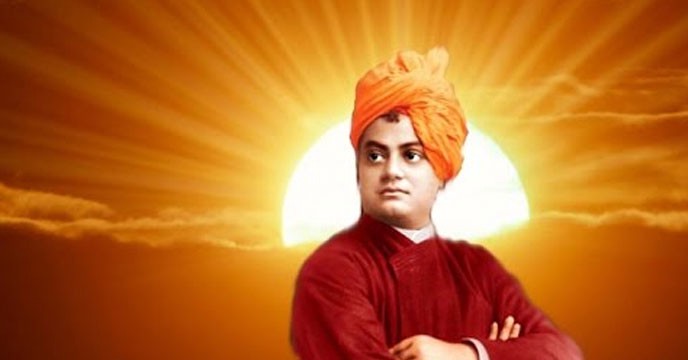 Making of Narendranath Dutta, Swami Vivekananda:
Narendranath Datta, later named as Swami Vivekananda, was born in Kolkata in an aristocratic family on 12th January, 1863 (died on 4th July, 102). His meeting with Sri Ramakrishna in 1880 changed the course of the life. Narendra was above the lure of Kamini Kanchana (lust and wealth) and dhayanasiddha – the grandeur of his renunciation and sincerity of his love for God. When family asked for matrimony, he would simply say that he was a monk, and that to him all women were as mother. He had a power of rapid reading and wonderful memory. Swamiji said that by observing strict Brahamacharya (continence) one could have not only an unfailing memory but mastery over all learning in a very short time. Once he said, “he had a special reverence for, RamaSita. He had also a great respect for Rama’s devoted servant, Hanuman.” He surrendered himself completely to Sri Ramakrishna as his guru, but it is certain that he took long time to do so. Gradually, “the doubting Naren was passing away; the devotional Naren, the spiritual Naren, the Hindu –was being born”. It was to Sri Ramakrishna that he owed his introduction to Hinduism. He had visions of god and goddesses etc. in the course of Sadhanas but they did not satisfy him. Once, he was meditating in a lying posture, when suddenly he felt that there was a great light at the back of his head, as he told. After demise of Sri Ramakrishna, he performed Viraja Homa to assume sannyas. Swamiji had always been a seeker of super-physical knowledge and by dint of sadhanas carried on for years had reached great heights. Through the Master’s grace he had a taste of highest bliss (the nirvikalpa samadhi) but longed to have more of it. The master had tried to restrain him since, as he said, it had been revealed to him that his disciple was a nityasiddha, i.e. an ever liberated one., who had been born this time on earth for carrying special task that was willed by the divine mother. The “touch of earth” that he received during his years of travel in India “reinvigorated” him and in suffering humanity he recognized “the self that manifests itself in the universe”. He became Swami Vivekananda, who was prepared to be born again and again and share the miseries of mankind, so that he could serve the God who was the saint and the sinner and above all, the poor of all races – Daridranarayana. He went by ship to USA in 1893 to attend the Parliament of Religions of the world and raised the status of India. Spiritual Paths: In a speech delivered in California on 5th January, 1900, Swamiji said, ”the little that I gained (about meditation) I worked for thirty years of my life. It took me thirty years to learn it; thirty years of hard struggle. Sometimes I worked at it twenty hours during the twenty-four; sometimes I slept only one hour in the night; sometimes I worked whole night, sometimes I lived in places where there is hardly any sound.” Accordingly, he was seven years old when he began meditation. He said each one of the yoga - work, wisdom, concentration and devotion, is capable of serving as direct and independent means for the attainment of freedom. However, he felt that a combination of all the four paths of liberation i.e. Path of Karma yoga (Self actions), Path of Jnana yoga (discrimination & dispassion), Path of Raja Yoga (meditation & Japa) and Path of Bhakti Yoga (devotion to chosen ideal), produce balanced character, free from the possible defects of each of the exclusive paths – the heartless of intellectuals, bigotry of the emotionalist, aloofness of meditative and arrogance of the active. There is possible danger in the path of Jnana yoga to become dry intellectualism and in the path of bhakti yoga to lead to meaningless sentimentalism. He recommended development of will and concentration. An average mind is frittered away or is spread out on too many things. Sri Vivekananda recommended service to the poor countrymen as veritable deities with in spirit of worship. Service originates from fullness of heart. Through heart comes inspiration. Love opens most impossible gates; love is the gate to all the secrets of the universe. Seeing God in society becomes spiritual discipline. Service of society becomes service to the God. Hence, he made spirituality practical. He suggested the three stages of karma. These stages make work to worship i.e. ‘work and worship’, ‘work as worship’ and ‘work is worship’. The gist of all worship is to be pure and to do good to others. He who sees Siva in the poor, in the weak, and in the deceased really worships Siva; and if he sees Siva only in the image, his worship is, but preliminary. The mere act of giving medicine or education to the suffering or ignorant is not spiritual but accompanying thought that God is in humans, makes the whole work worship. This kind of attitude towards work purifies mind. Purified mind dawns knowledge or love of God. Philosophy to Service - Worship in Temples to Practical worship: “Service cannot degenerate into charity”, He said. A person becomes charitable either to get rid of beggar or to get name and fame or if it is a purer motive, out of sympathy. Altruistic actions are performed for one’s own sake. The ideal of service is inspired by reverence and humility. The giver thanks to the receiver and the receiver stand up and permit. The worshipper can only serve and adore, not pity and help. No service is small, for all work is God’s service and he takes as much care of the means as of the end. Swamiji wrote in a letter, “I desire not the supreme state with all its eight siddhis, may I assume the sorrow of all creatures that suffer and enter into them so that may be made free from grief. I have lost all wish for my salvation, may I born again and again and suffer thousands of miseries so that I may worship the only God that exists, the only God that I believe in, and the sum total of all souls.” He exhorted. Unfurl the banner of love! ‘Arise, awake, and stop not till the goal is reached. Nothing can be done without renunciation. If one wants to help others, one’s little self (ego) must go. He said: ‘throw away everything, even your own salvation, and go and help others.’ Swami Vivekananda identified the following important qualities of human being:
Patriotism: To Swamiji patriotism was an expression of true worship and loving to fellowmen, a means to the realization of the highest. He said: renunciation and service are the national ideals of India. Swami Vevekananda asked, ‘do you feel that millions are starving today, and millions have been starving for ages’. Does it make restless? Does it make you sleepless? Are you seized with that idea of the misery of ruins, and you have forgotten all about your name, your fame, your wives, your children, your property, even your own bodies? Have you done that? This is the first step towards service, service to the nation. Education: Swami Vivekananda put the maximum emphasis on training and education. He said: the chief cause of India’s ruin has been the monopolizing of the whole education and intelligence of the land among a handful of men. If we are to rise again, we shall have to do it by spreading education among the masses. He further said: so long as the millions live in hunger and ignorance, I hold every a traitor who, having been educated at their expense. Education is not the collection of information but liberation of inexhaustible inner potentialities of the person. The education will be best, if it is given through religion. Spiritual training is essential in any educational scheme. The medium should be vernaculars. Education should be given orally by telling stories, history, globes, charts, posters etc. and through audio-visual means. The teachers must go to the villagers instead of expecting the villagers to come to them. This is the duty to the community. He stressed that educationist of India must learn the lesson from ancient rishis and regenerate the ancient gurukula system with the brahmacharya idea of austerity, virtues and continence for the students. Equality: Theoretically everybody is same. But it must be only in mind and never in practice. Wipe off this blot. The same soul resides in all. This is the basis for the equality in the rights of enjoyment. More the privileges, more is the intensity of tyranny. Reference:
 Sri Ramakrishna was a great soul who realised all major religions and had vision of Ma Kali, Sri Rama, Sri Krishna, Sri Hanuman, Sri Mohammad, Sri Christ and son. He was born on February 18, 1836 (5.15 AM) at Kamarpukur (Hooghly district, West Bengal) to the parents named as Khudiram Chattopadhyaya and Chandra Devi. He was named as Gadadhar, the bearer of mace, an epithet of Vishnu.
Early ages: Gadadhar experienced the spiritual ecstasy as early as at the age of six or seven. One day, he saw a flight of snow-white cranes passing in the backdrop of dark thunder clouds. Instantly, he fell unconscious and experienced an indescribable joy. Gadadhar was interested in reading & hearing the religious stories of puranas and in company of wandering monks & pilgrims on the way to Puri. Gadadhar, while playing the roles of Shiva, Radha or Krishna, often lost himself in the character he was portraying. At the age of sixteen (year 1852), Ramkumar, the elder brother of Gadadhar called him to Calcutta to assist in his Priestly duties and to study bread earning education. Gadadhar was not keen in bread earning education. Saradamani, a little girl of five, was selected as the bride for Sri Ramakrishna. The marriage ceremony was performed in the year 1859. Spiritual Experiences & Vision of Gods: Rani Rasmani, a rich widow belonging to the sudra caste, purchased twenty acre of land in Dakshineswar, in 1847 (6.4 Km away from Calcutta) and created a temple garden and constructed several temples including Ma Kali temple, Shiva temples, Radha-Krishna temple etc. in 1855. Sri Ramakrishna accepted the duty of priest in the temples. The worship in the Kali temple intensified Sri Ramakrishna’s yearning for a living vision of mother Kali. He began to spend whole night in meditation. Without any great knowledge of scriptures, or the guides to help him, and with only simplicity & purity, he longed for a vision of the divine mother. He began his sadhanas for twelve years, but the vision did not come. His longing for the mother was so intense that in agony, he would rub his face against the ground and weep desperately that people, thinking he had lost his earthly mother. One day, he was very restless that it might not realise Her in this life. He determined to put an end to his life. He jumped like a madman to seize the sward of mother Kali, suddenly the blessed mother revealed Herself. The buildings and everything vanished from his sight and limitless, infinite, effulgent ocean of consciousness revealed. He fell unconscious and experienced undiluted bliss. He continued his spiritual practices more intensely. During that period of meditation, he would hear strange clicking sounds in the joints of his legs. As his spiritual mood deepened, he felt more and more to be a child of the Divine Mother. He learnt to surrender completely to Her. Later he practiced the various attitudes of the Vaishnava schools, from Dasya bhava to madhura bhava. In each case his sadhanas ended in complete union with his object of worship. He began to meditating on Sri Hanuman by assuming the attitude of a servant. His way of life began to resemble those of a monkey. He lived on fruits and roots. He jumped from place to place instead of walking. After a short while he was blessed with a vision of Sita, the divine consort of Rama, who entered his body and disappeared there with the words, “I bequeath to you my smile.” A Brahmin woman came to Dakshineswar. She was adept in the Tantric and Vaishnava methods worship. After listening of the experiences, visions and symptoms of madness of Sri Ramakrishna, she proclaimed openly that Sri Ramakrishna, like Sri Chaitanya, was an incarnation of God. He accepted Brahmani as his guru (in year 1861). Sri Ramakrishna now set himself to the task of practising spiritual disciplines according to traditional methods laid down in the tantra and Vaishnava scriptures. He practised all the disciplines of the sixty four principal Tantra books, and it took him never more than three days to achieve the results promised in any one of them. After the observance of a few preliminary rites, he would be overwhelmed with a strange divine fervour and would go into Samadhi, where his mind would dwell in exaltation. He saw in a vision the ultimate cause of universe as a huge luminous triangle giving birth every moment to an infinite number of worlds. He heard the Anahata Sabda, the great sound of Om. He acquired eight supernatural powers of yoga. The most remarkable experience was awakening of the Kundalini Sakti, the serpent power. He further saw that the Kundalini went upward the different lotuses bloomed. And the phenomenon was accompanied by visions and trances. Later on he described to his disciples and devotees the various movements of the Kundalini: birdlike, monkey-like, and so on. After completing the Tantric sadhana in year 1863, Sri Ramakrishna followed the discipline of Vaishnavism. Vaishnavism humanizes God. God is regarded as the devotee’s Parent, Master, Friend, Child, Husband or Sweetheart, each succeeding relationship representing an intensification of love. There came to Dakshineswar, a wandering Vaishnava monk, Jatadhari, whose ideal deity was Ramalala. Soon Ramalala became the favourite companion of Sri Ramakrishna too. A very sweet relationship sprang up between him and Ramalala, for whom he felt the love of a mother. One day, jatadhari left, leaving the image with Sri Ramakrishna. Sri Ramakrishna was blessed with a vision of Sri Rama through Ramalala. In love pursuit, he regarded himself as one of the gopis of Vrindavan, mad and longing for her divine sweetheart, Sri Krishna. Day and night, he wept bitterly and forgotten food and drink. The yearning turned into mad frenzy; for the divine Krishna began to play taunt, now and then revealing Himself, but always keeping at a distance. It is advised in the Vaishnava scriptures that one to propitiate Radha and obtain her grace to realize Sri Krishna. So he turned his prayer to her. Within short time he enjoyed her blessed vision. The love of Radha is the precursor of the resplendent vision of Sri Krishna, and Sri Ramakrishna soon experienced that vision. Totapuri, the non-dualistic Vedanta philosophy, who experienced the ultimate reality of Brahman, initiated Sri Ramakrishna into the monastic order in 1864 and performed the rituals of destroying his attachment to relatives, friends, body, mind, sense organs, ego, and world. Totapuri asked the disciple to withdraw his mind from all objects of relative world, including god and goddesses, and to concentrate on the absolute. Sri Ramakrishna remained completely absorbed in Samadhi for three days. After nirvikalpa Samadhi, Sri Ramakrishna realised that world became glorious manifestation of the divine mother; maya became Brahman. Sri Ramakrishna discovered that maya operates in the relative world in two ways, and he termed these “avidyamaya and vidyamaya”. Avidyamaya represents the dark forces of creation: sensuous desires, evil passions, greed, lust, cruelty, and so on. It sustains the world system on the lower planes. It is responsible for the round of person’s birth and death. It must be fought and vanquished. But vidyamaya is the higher force of creation: the spiritual values, the enlightening qualities, kindness, purity, love, devotion. Vidyamaya elevates man to the higher planes of consciousness. Sri Ramakrishna remained in bhavamukha, on the threshold of relative consciousness, the border line between the absolute and the relative. He was to keep himself at the “sixth centre” of Tantra, from which he could see not only the glory of the seventh, but also the divine manifestations of the kundalini in the lower centres. He thus bridged the gulf between the personal and impersonal, the immanent and the transcendent aspects of reality. Sri Ramakrishna described: “when I think of the Supreme Being as inactive-neither creating nor preserving nor destroying, I call Him Brahman or Purusha, the impersonal God; when I think of Him as active-creative, preserving and destroying, I call Him Sakti or Maya or Prakriti, the personal God. The Divine Mother and Brahman are one.” From now on the Sri Ramakrishna began to seek company of devotees and holy men. Sadhus of all denominations-monists and dualists, Vaishnavas and Vedantists, Saktas and worshippers of Rama-flocked there in ever increasing numbers. Ascetics and visionaries came to seek Sri Ramakrishna’s advice. Sri Ramakrishna had not read books, yet he possessed an encyclopaedic knowledge of religions and religious philosophies. To him the service of people was the same as the worship of God. Towards the end of 1866, he began to practice the disciplines of Islam, under the direction of his mussalman guru, Sufi Govinda Rai. He dressed as Mussalman and repeated the name of Allah. After three days, he saw the vision of a figure, perhaps Mohammad. The figure gently approached him and finally lost himself in Sri Ramakrishna. Thus he realised the Mussalman God. In 1870, Sri Ramakrishna went with a tour party to Varanasi, Paryagraj, Vrindavan and Mathura. There, he visited the great women Vaishnava saint, Gangamayi. He later visited Nadia, the birth place of Sri Chaitanya. In 1872, Sarda Devi (aged of around 18 years) paid her first visit to her husband at Dakshineswar. He taught her duties of household affairs and mysteries of spiritual life. They lived together above worldly plane. On an auspicious day, Sri Ramakrishna arranged a special worship of Kali, the Divine Mother and instead of an image of the Deity; he placed on the seat the living image, Sarda Devi herself. The worshipper and the worshipped went into deep Samadhi and in the transcendental plane their souls were united. Sometime in November, 1874, Sri Ramakrishna was seized with irresistible desire to learn the truth of the Christian religion. He began to listen to reading from the bible, by Sambhu Charan Mallick. Sri Ramakrishna became fascinated by the life and teachings of Jesus. One day, when his eyes became fixed on the painting of the Madonna and Child. Intently watching it, he became gradually overwhelmed with divine emotion. The figure in the picture took on life, and the rays of light emanating from them entered his soul. Christ possessed his soul. For three days he did not set foot in the Kali temple. On fourth day, in the afternoon, as he was walking in the Panchavati, he saw coming towards him a person with beautiful large eyes, serene countenance, and fair skin. As the two faced each other, a voice rang out in the depths of Sri Ramakrishna’s soul: “Behold the Christ, who shed His heart’s blood for redemption of the world, who suffered a sea of anguish for love of men. It is He, the Master Yogi, who is in eternal union with the God. It is Jesus, Love Incarnate.” The son of Man embraced the son of the Divine Mother and merged in him. Sri Ramakrishna realised his identity with the Christ, as he had already realised his identity with Kali, Rama, Hanuman, Krishna, Brahman, and Mohammad. Sri Ramakrishna accepted the divinity of Buddha. He also showed great respect for the Tirthankaras, who founded Jainism, and for the ten Gurus of Sikhism. In April 1885, the Master’s throat became inflamed. The doctor diagnosed the illness as cancer. The master wished to make Narendra his spiritual heir who continued the work after Sri Ramakrishna’s passing. Sunday, August 15, 1886, the master’s pulse became irregular and he took maha-Samadhi at 1.02 AM on 16th August, 1886. Reference: The Gospel of Sri Ramakrishna – by Swami Nikhilananda  Sri Rama, the Historical Being
Sri Rama, the incarnation (Avatar) of the Supreme Protector, Sri Vishnu, is widely worshipped all over India and South & South East & East Asia (Philippines, Thailand, Laos, Mongolia, Siberia, Malaysia, Burma, Indonesia, Java, Sumatra, Cambodia, China, Japan, Lanka and Vietnam). The article aims to highlight that Sri Rama, the historical being. Further, it deals with the questions such as, Whether Sri Rama Born; When Sri Rama Born. Whether Sri Rama Born: Many people create controversies on the birth of Sri Rama. Bhagwan Sri Rama Chandra was born in human form on the ninth day of the lunar month Chaitra as per Hindu calendar (March–April) in Ayodhya (UP) at the end of the second Age or Treta-yuga. The fact has been proved in Supreme Court in its judgement dated 9th November, 2019 of Ramjanmabhomi case; based on scriptures (including 'Valmiki Ramayana' and 'Skanda Purana') and archeological excavations. There are numerous places that are indicated as the locations where various events happened in the life of Sri Rama detailed in Ramayana. These locations are now historical sites such as Chitrakoot, Bhadrachalam, Ramesvaram, Nasik, Hampi, Pampa, Sabrimala, Janakpur in Nepal, several caves, such as Ravana Ella Falls in Sri Lanka and others. When Sri Rama Born: As per the Institute for Scientific Research on Vedas (I-SERVE), planetarium software has ascertained the birth of Lord Rama as 10th January 5114 BC in Ayodhya based on the details available in Valmiki Ramayana. However, as per Vayu purana (70/48) shloka – “।।त्रैतायुगे चतुर्विर्श रावणस्तपसः क्षयात्।। ।।रामं दाशरथिं प्राप्य सगणः क्षयमीयवानम्।।“ Means:-for the behavior of Ravna & due to his bad deeds he was killed in battle by Dashrath Nandan Rama in battle of sri lanka, in 24th stage of treta yuga. If we go by Vayu purana, Sri Rama was borne in last part 24th stage (Manvantar) of trata yuga. As per Vedic calculations, each Manvantar is further divided into chaturyugis. Each chaturyugis consist of satyuga, traita, dwapar and kaliyuga having 4,800 Deva Vatsaras, 3,600 Deva Vatsaras, 2,400 Deva Vatsaras and 1,200 Deva Vatsaras (summing up to 12000) respectively. Deva Vatsara means one day and one night of God i.e. equal to one human year of 360 days approx. Hence, one chaturyugi is 12,000 * 360 = 4320,000 human years. This is the 28th chaturyugi and first charan(period) of this chaturyugi is in continuation. Hence, the period, since Sri Rama till now comes to around 1.75 to 1.80 million years back. According to astronomy, the positions of zodiac constellations come back to their original place after a cycle of approximately 26,000 years. The scientific interpretation of the photographs of the remains of Adam's Bridge (Ram Setu) taken by NASA's Gemini-11 spacecraft in 2002, reveals that this ancient bridge linking India to Sri Lanka was manmade, and it was dated to be at least 1.75 million years old. When Worship of Sri Rama heightened: Since thousands of years Sri Rama’s character has been inspiring millions of people. Ramananda (Born in Prayagraj UP and settled in Varanasi, lived in 1300-1411 century), placed devotional focus upon Rama, whom he considered supreme Lord. He was the spiritual Guru of the twelve great leaders of Vaisnava cult in North India. Among the group's most prominent members were Tulsidas, Kabir (Muslim), Mirabai, Ravidas (cobbler by birth), Sena (barber by caste), Dana (jat), Pipa (Rajput), Dadu and others. It is widely known that Sant Tulsidas has met Bhagwan Rama through Bhakt Hanuman as a reward of composing Sri Ramcharitramanas. Sri Rama, the Almighty
Sri Rama is the most popular symbol of magnanimity and virtue. Swami Vivekananda mentioned that Sri Rama is "the embodiment of truth, of morality, the ideal son, the ideal husband, and above all, the ideal king." He is seen as an embodiment of perfection. He led by example. It is said, “Name of Rama is bigger than Rama himself”. The fact lies in the word "Rama" which is made up of two spores (bijakshara), "Agni Beej" and "Amrit Beej". These letters provide strength to the mind, body and soul. The article aims to highlight, whether Sri was Purna Avatara (Incarnation); When Worship of Sri Rama heightened; Why Sri Rama called as Maryada Purushottam; Whether Sri Rama was a Man of Modern Management etc. Whether Sri Rama was Purna Avatara (Incarnation): He was incarnation of Sri Vishnu Bhagwan. Narad ji has described sixty four virtues of Sri Rama to Valmiki ji in Bal kand. A few virtues are one who controls his mind, most powerful, most brilliant, most tolerant, with control over senses, intelligent, virtuous, orator, knower of Dharma, protector of living, and one who is truthful in his resolutions. He displayed unequaled qualities labeled as noble, generous, ethical, fearless, simple, respectful to others etc. He never lied. Some people say he was not Purna Avatar but Maryada Purushottam Bhagwan Rama. Sri Nimbarkacharya, the exponent of Dvaitadvaita philosophy who lived during 12–13th century, sub-divided the incarnations into two categories viz. Amsarupavataras (Matsya, Kurma, Varaha, Vamna etc.), when He manifests them only partially and Purnavataras (Sri Narsimha, Sri Rama and Sri Krishna) when all the qualities & powers of God are manifested. But Sri Madhvaharya, the exponent of Dvaita philosophy who lived during 1238-1317, holds that there is no difference between these incarnations. They are all His Svarupamasas or expression of His entire nature. Why Sri Rama called as Maryada Purushottam: Sri Rama was born in human form and experienced, what an ordinary human being undergo during his lifetime i.e. the pleasures and pains. He is labeled as Maryada Purushottam. Maryada Purushottam is a Sanskrit phrase in which "Maryada" translates to "honor and righteousness", and "Purushottam" translates to "the supreme man". He never transgressed the human and social life. He lived always in Maryada (limitation) such as kept the vow of one wife, stick to what he has said. His life reflects an ideal way of living as a student, a householder, a king, a father, a son, a husband, a disciple. He always followed orders of parents, Guru and saints.
Whether Sri Rama was a Man of Modern Management, Yes: Modern Management has provided “SWOT Analysis” as a tool for strategic planning of organizations or situations. SWOT stands for Strengths, Weaknesses, Opportunities, and Threats. Strengths and weaknesses are internal over which one has some control and opportunities and threats are external over which one has little or no control. Strengths and opportunities are favorable and weaknesses and threats unfavorable. The life story of Sri Rama is living lesson for one and all, how he turned weaknesses into strengths and threats into opportunities. Turn Weaknesses into Strength – For a leader, “leading by Example” is best way to set the tone for others. In absence of resources during 14 years exile, he displayed leadership qualities as under:
Turned Threat into Opportunities
 Sri Madhvacharya, the dualist
Sri Madhvacharya was born on family of Tulu Brahmin, near Udupi, Karnataka. he lived during 1238-1317. Sri Madhva was also known by three other names – Vasudeva, Purnaprajna and Anandatirtha. He demonstrated that each Vedic Sukta had three meanings, the Mahabharata ten meanings, and each word of the Vishnu-sehsranama, a hundred meanings. He introduced the use of animal forms made of a paste of black gram power and ghee in place of animals in sacrifices. He proclaimed that in most ancient days Vedic rituals did not allow animal sacrifice. He, besides philosophical works, influenced great devotional movement known as Dasa Kuta, in Karnataka. He also made excellent arrangements for worship in the temple by founding eight Maths in Udupi. Madhva, unlike all other vedantic acharyas, built an intellectual structure to stimulate people to sustain their faith in a real God and real spiritual destiny for human beings to be attained through devotional disciplines enlivened and enlightened by love and knowledge, and crowned by the grace of God. Madhva’s philosophy is called Dvaita or the Doctrine of the Two, because it accepts two entirely separate substances, the independent reality (God) and the Dependent reality (the Jivas, Nature and other allied categories). He challenged the philosophy of Advaita (philosophers – Sri Gaudapada & Sri Adishankaracharya) and put forth following reasoning: Theory of Illusions (Khyati-vada): Advaitia Philosophy: According to Advaita philosophy (means Non-dual), Brahman is the one and only reality and everything else is a mere illusion. Maya creates apparent multiplicity in a universe where only Brahman really exists. One of the most common examples used to describe the state is momentarily seeing a snake in a rope when it is lying in the darkness. The Advaita system has three levels of experience as under:
Advaitins maintain that Vyavaharika is sublated (taken away) when consciousness get established in Paramarthika level. The Vyavaharika world is then realized as disappearing. The evidence is of the perfected sage. Dvaita Philosophy: However, Dvaitins dispute both claims of Advaitins. If there is a at all a non-dualistic experience, it is only the temporary disappearance of world consciousness in the blissful absorption of the Jiva in mystic communion with the divine. The Vaisnavite doctrine claims:
Location of Avidya: According to the Advaita Philosophy, Jiva is one with Brahman and this assumes Avidya being in Brahman. Brahman will thus become the center of all corruption. As per Dvaita philosophy, Avidya has its locus only in the Jiva. So their theory of Avidya is called Svabhavajnana-vada, which means the forgetfulness of the Jiva’s true nature and of his dependence on God. It is induced in them by the Independent Being, God. As Jiva is different from Brahman, Avidya is located in the Jiva does not affect Him as in Advaita. Though located in the Jiva, it is not natural to him. For being, an eternal category and a reflection of God, the Jiva’s existentiality and self-consciousness are retained, but his blissful nature is gravely clouded and bodily identification is generated. Reference: Bhakti Schools of Vedanta – by Swami Tapasyananda, Sri Ramakrishna Math, Chennai.  Shri Krishna, the Almighty
श्रीकृष्ण गोविन्द हरे मुरारे । हे नाथ नारायण वसुदेवा । Shri Krishna appeared on the earth around 5122 years ago to teach the human beings, how to lead balanced life. As in human form, he had to undergo both pleasures and pains. Shri Krishna taught not to crave for power, wealth, kingdom, fame etc. which are mundane desires. He set ideals for different relationships. Various events occurred during his life, displayed these attributes. Bhagwan Sri Krishna displayed sixteen attributes viz. compassion, patience, forgiveness, impartiality, justice, impartiality, detachment, meditation & spiritual powers, invincibility, beneficence, beauty incarnate, best of dancer, best of singer, honesty, truthfulness, Perfect master of all arts, such as poetry, drama, painting etc. and controller of all & controller of self. Moreover, he displayed fearlessness, freedom from anger; renunciation, tranquility, steady determination, vigor, etc. In Human form enjoyed pleasures as well as pain -Shri Krishna suffered more than anybody else. But, smile never left his lips.
Displayed control over senses –Shri Krishna displayed control over senses and took decisions in larger public interest.
War as a last resort –He tried to avoid killing Kansa, Shishupal, Narakasur and war between Kauravas & Pandavas.
No egoism, humbleness –
Spread love – Sri Krishna spread spiritual love throughout his life. He gave spiritual love to gopals & gopis in childhood, Udhav, Sudama, Padavas (friends), to deviki & Yashodha (mothers), etc. He even gave liberation to Putana who tried to kill him & Jara hunter who killed him. Taught respect for different relationships – Throughout his life, Shri Krishna played whatever role; He perfected that role and became role model.
Bhagwan Sri Krishna is called as Purna Avatara as he displayed sixteen “Kalas” viz.
 In Hinduism, the Vedanta of the Upanishads mainly preaches the doctrine of the Absolute Being, the non-dual Brahman, about God. “Ekam Sat Vipra Bahudha Vadanti” (एकम सत विप्रा बहुधा वदन्ति), the Sutra quote can be traced to the Rigveda and the Upanishads. It literally means “Truth is one, the wise perceive it differently” or God is one, the enlightened or the wise, call him by different names or perceive him differently. God is self-evident, impersonal, omniscient, the Knower and Master of nature, the God of all. He is behind all worship.
What is Brahman: Brahman is Supreme God and not “one of the four castes i.e. Brahmin which is popular in common parlance”. He is the highest Supreme Being or the God. The word Brahman is derived from the root word "brah" meaning to expand. It is a reference to his infinite power, infinite dimensions, and endless manifestations. The Brahman therefore has been classified into two categories as under:
Other Nomenclature of Brahman: In addition to the term Brahman, God is also addressed and referred to as 'Paramatman', 'Purusha', 'Ishvara', 'Bhagavan', Narayana and the like. As it was found that the popular mind could not grasp the too lofty concept of the Upanishads, The theology of the Puranas mainly revolve around the Trinity - Vishnu, Brahma and Shiva - as also the incarnations of Vishnu and the Shakti’s of the Trinity - Lakshmi, Sarasvati and Durga - and the two sons of Shiva. The Puranas amplified the religious aspect of adoration of God. Attributes of Brahman: Vedas and the Upanishads speak of four aspects (Padas) of the Supreme Being viz. Avidya pada (Ignorance Aspect), Vidya pada (Knowledge Aspect), Ananda Pada (Bliss Aspect) and Turiya pada (Transcendent Aspect). The Brahman is all inclusive and all absorbing, and described as Sat-Chit-Ananda (Existence-Knowledge-Bliss) and Satyam, Jnanam, Anantam (Truth, Consciousness and Infinite). Narayana name indicates that He possesses six glorious powers as described in Vishnu Purana. These powers are as under: a) Aishvarya – it is Sovereignty i.e. unchallenged rule over all. b) Jnana – It is the Power to know about all beings of all times simultaneously. c) Bala – It is the strength or capacity to support everything by His will and without any fatigue. d) Virya – It is the power to retain the immateriality as the supreme spirit in spite of being the material cause of mutable creations. e) Shakti – It is the capacity to make the impossible possible. f) Tejas – the splendor which expresses His self-sufficiency and capacity to overpower everything by His spiritual effulgence. Creative Power of Brahman: When Prakriti and the Jivas go into latency during Parlaya (dissolution) in their substratum, the Supreme Being or Brahman is described as causal or Karana-Brahman. When they come into manifest condition Brahman is called Effect Brahman or Karya Brahman. Prakriti and the Jivas always form an organic whole with Him in all states. Creative Process of Brahman: The purpose of creative process is the fructification of karma of Jivas who are countless in number. Their essential nature of consciousness and bliss is covered up by the mist of Avidya (ignorance). They attain to higher and higher evolution through the attainment of better and better body-minds suited for the adoration of the divine until they finally obtain liberation through the grace of God. The creative aids this bestowal of grace in Jivas and their release from Samsara. Manifestations of Brahman: According to the Sri Vaishnava doctrine, The Supreme Being manifests mainly in four forms as under:
Supreme Being has several other forms of His creative manifestation for meditative purpose as under:
These are of three types as under:
But Sri Madhvaharya holds that there is no difference between these incarnations. They are all His Svarupamasas or expression of His entire nature. Reference: Bhakti Schools of Vedanta – by Swami Tapasyananda, Sri Ramakrishna Math, Chennai. |
Archives
October 2026
Categories |

 RSS Feed